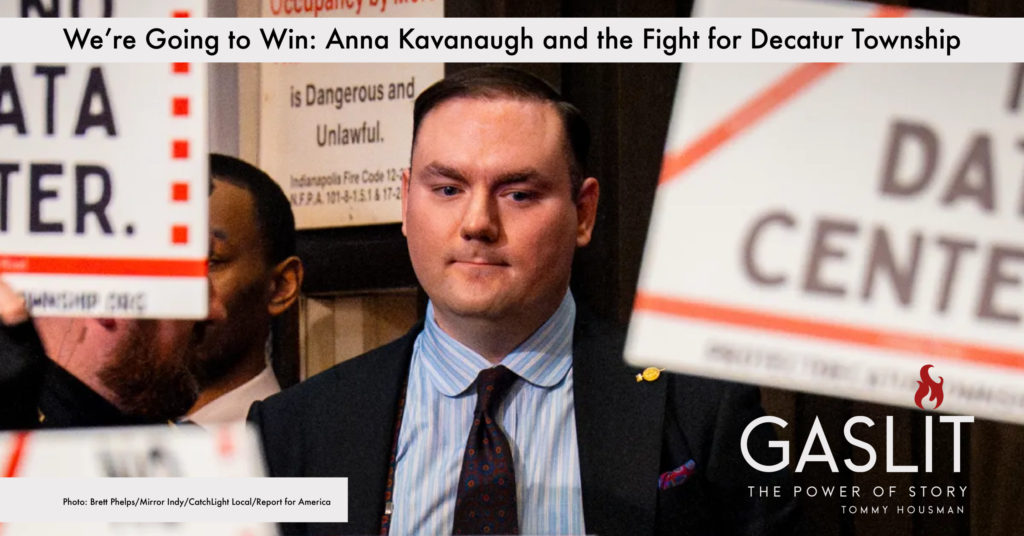
Watch or listen to episode three
How a community finds itself
Anna Kavanaugh did not expect to become an expert in zoning, land use, tax abatements, data centers or the Metropolitan Development Commission. She went to a community meeting because her grandmother told her to go see what was happening.
That was pretty much the beginning of it.
Anna lives in Decatur Township, a working-class community on the southwest side of Indianapolis. In November 2025, residents learned that a data center development was being proposed in their community. Anna saw a Facebook post from the local city councilor about an open house, and her grandmother told her to go check it out. What was supposed to be an opportunity for residents to ask questions quickly became something much more contentious. People wanted to know why the company would receive tax breaks, what the community would receive in return and why this was happening in their neighborhood in the first place. The room became so crowded and heated that, according to Anna, the fire chief eventually had to help clear people out.
What happened afterward is the part of Anna’s story that I found especially interesting. Residents started finding each other. Protect Decatur Township formed, and people who probably disagree about almost everything else began working together. Anna described a group ranging from card-carrying Democratic Socialists to people who would happily vote for Donald Trump again. Nobody was pretending those political differences did not exist. They simply found themselves on the same side of this fight. One member of the group even volunteered to canvass Republican voters because he had voted for Trump himself and knew how to talk to them.
There are not many issues in America right now that produce that kind of coalition.
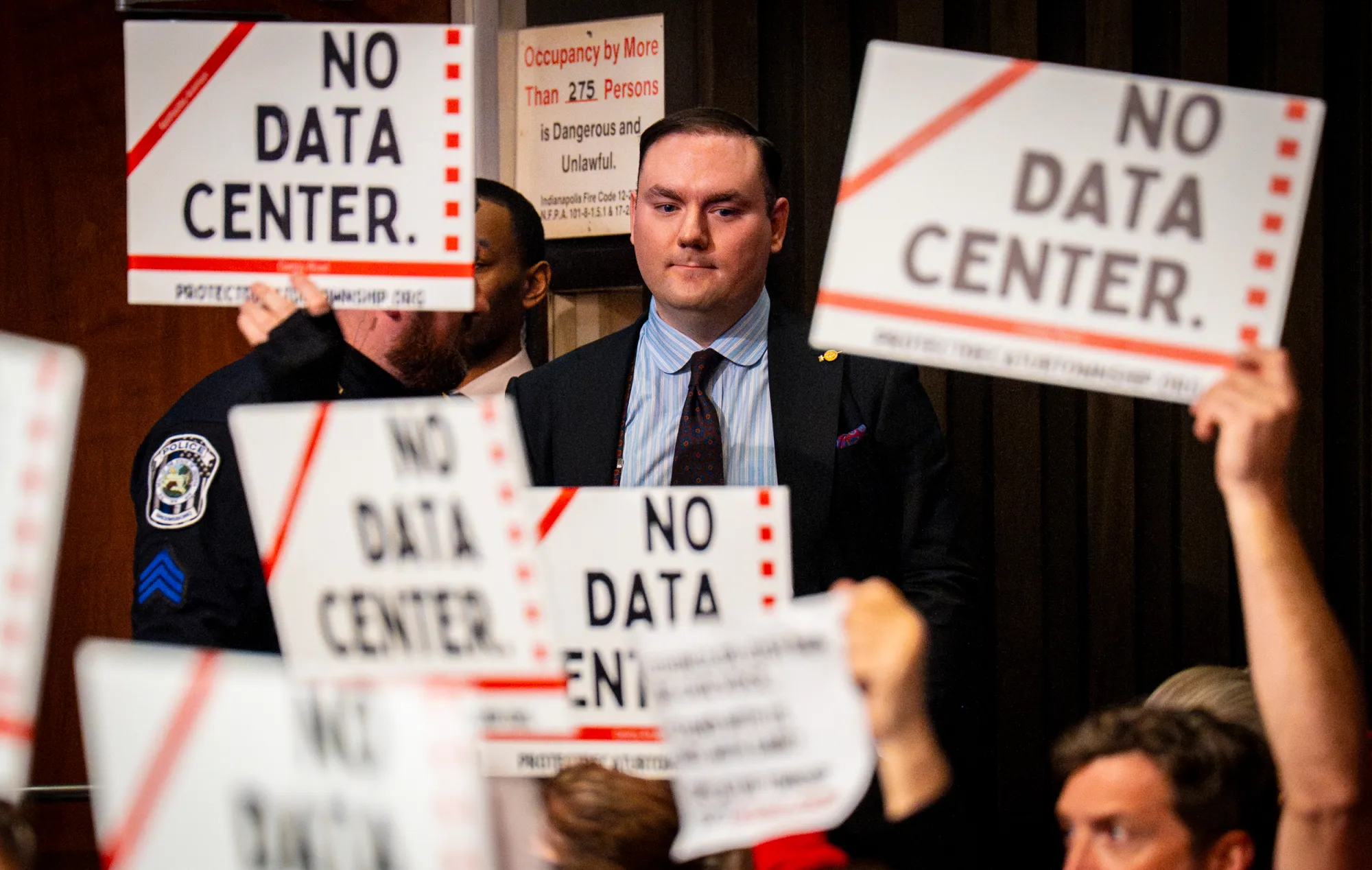
Joshua Bain at the March 18, 2026 Metropolitan Development Commission meeting. Photo: Brett Phelps/Mirror Indy/CatchLight Local/Report for America. Source
What does the community receive?
The reason appears pretty straightforward. When something large is proposed a few hundred feet from your home, political identity can become a lot less important than what is happening in your backyard. People start asking practical questions. How much power is this going to use? How much water? What happens to the electrical grid? What happens to our utility bills? How much noise will there be? What happens when diesel generators turn on? How many permanent jobs will actually be created? Who receives the tax benefits? Who receives the risk?
Decatur Township is a community where Anna says about half of the students qualify for free or reduced-price lunch. From the beginning, she wanted to know what a development consuming enormous amounts of electricity, land and other resources would give back to the people living there. That question became even sharper when the company sought roughly $240 million in tax abatements and residents were presented with an aquatic center as part of the community benefit package. During our conversation, that became the “water park,” and eventually, because neither of us could leave it alone, the “sprinkler system.”
There is humor in that exchange, but the frustration underneath it is real. If a community is being asked to accept a project of this size, people are going to compare what the developer receives with what the community receives. They are going to ask whether an aquatic center, road improvements or other amenities are enough. They are going to ask whether those benefits compensate for decades of industrial activity, increased energy demand, environmental concerns and the possibility of having a massive data center very close to homes.
Who gets to decide?
Anna’s biggest frustration, however, centered on the process used to approve the project.
She explained that another proposed data center elsewhere in Indianapolis had gone through a rezoning process. That allowed an elected city councilor to call the project before the full City-County Council. In Decatur Township, the developer instead pursued a variance of use through the Metropolitan Development Commission. Anna and other residents believe that decision prevented elected officials from having the same level of control over the project and weakened the community’s ability to influence the outcome. That process is now part of a legal challenge brought by nearby residents seeking judicial review of the commission’s decision.
Anna is very clear about how she views what happened. She believes the process was used to get around community opposition. The lawsuit argues that the variance should not have been granted under Indiana’s standards, including the requirement involving whether the hardship claimed by the developer was self-imposed. The city and company are contesting the case, and the courts will determine the legal questions. Protect Decatur Township, meanwhile, has continued helping residents raise money to keep the challenge going.
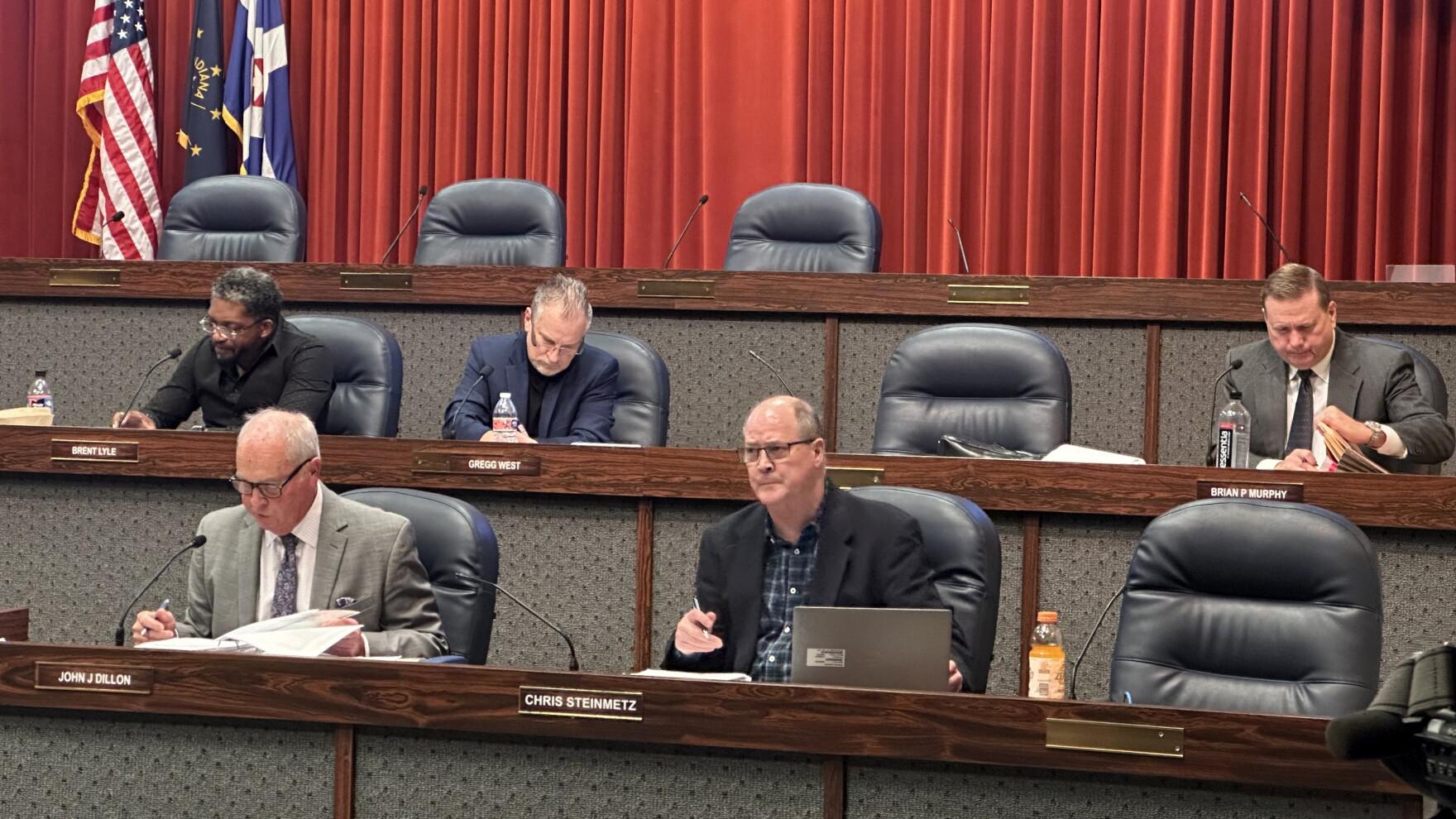
The Metropolitan Development Commission considers the Sabey tax abatements on September 16, 2026. Photo: Zak Cassel/WFYI. Source
The cost of keeping a challenge alive
Money hangs over nearly every part of this story.
There is corporate money. There are tax abatements. There are construction jobs. There are utilities that will sell more electricity. There are attorneys on both sides. Then there are working-class residents holding fundraisers, going out to eat at dine-to-donate events, hosting karaoke nights and raising whatever they can to continue paying legal bills.
At one point I told Anna that it looked bleak.
She immediately told me not to say that.
That became one of my favorite moments in the episode because it captures the difference between us during much of this conversation. I have become deeply skeptical about how these fights end. I look at the amount of money involved, the political pressure to build data centers, the demand for AI infrastructure, utility interests and the speed at which these projects are moving across Indiana, and I have both guards up.
Anna still believes they are going to win.
She also has a reason for believing it. Protect Decatur Township did not simply complain online and disappear. Residents canvassed. They attended hearings. They collected signatures. They learned zoning law. They raised money. They went to court. They kept talking to one another. Anna said around 1,200 Decatur Township residents signed in opposition to the project while a company-backed petition drew only a small number of supporters. Whatever eventually happens in court, that level of opposition is difficult to dismiss as a handful of angry people showing up to meetings.
“Communities have people. People can organize.”
Tommy J. Housman · from this story
More than a parcel of land
The conversation became more personal when Anna talked about her grandmother. Her grandmother has lived in Decatur Township for about 50 years. Anna worries about what the proposed facility, including its large number of backup diesel generators, could mean for the air around homes like hers. She described the frustration of imagining her grandmother losing the ability to enjoy her own backyard because a corporation based somewhere else decided that this was the place where it wanted to build.
That gets directly to one of the questions running throughout this season of Gaslit: who gets to make these decisions?
A company can look at a parcel of land and see infrastructure, electrical capacity and a business opportunity. A utility can see new demand. A construction company can see contracts. An economic development organization can see investment. A local resident sees the house where her grandmother has lived for 50 years.
Those perspectives collide when development arrives.
There are also basic questions residents still want answered about what will eventually happen inside these facilities. Anna described Sabey as a colocation data center company, meaning the company can build and operate computing infrastructure that other companies or organizations later use. From the perspective of the people living nearby, that raises another question: if your community is providing the land, electricity, infrastructure and tax incentives, how much should you know about who ultimately uses the facility and what it is being used for?
Then there is electricity. Indiana is rapidly attracting data center proposals while communities are already dealing with utility costs and concerns about grid capacity. Anna questioned whether the existing system can absorb continued large-scale data center development without new generation, new transmission, higher costs or some combination of all three. She told me that her own electric bill reached around $700 during the summer. When you are already paying bills like that, promises that a massive new customer will somehow help spread costs are going to be met with skepticism.
By the end of the conversation, however, we came back to something very simple: show up.
Show up. Do something.
Anna told people facing similar projects to find one another. Go into the local Facebook group. Ask who else is concerned. Contact organizations that already understand these fights. Attend the hearings. Put a sign in your yard. Help raise money. Learn the legal process. Protest if that is what you can do. Make a podcast if that is what you can do.
Do something.
That has become a recurring theme this season because the people I am talking to did not begin as professional organizers. They became involved because something was happening where they live and somebody had to pay attention.
Anna’s optimism was probably good for me.
A reason to believe
Near the end of the interview, I asked her again why she believed they would win. She did not hesitate. She believes the legal process will ultimately hold the Metropolitan Development Commission accountable, and she believes the community will keep fighting long enough to get there.
I hope she is right.
I also think the larger lesson survives regardless of what eventually happens in court. Powerful institutions have lawyers, lobbyists, developers, political connections and enormous amounts of money. Communities have people. People can organize. They can learn. They can demand records. They can raise money. They can vote. They can sue. They can make noise. They can refuse to quietly accept whatever somebody else has planned for the place where they live.
Anna kept saying they were going to win.
By the end of the conversation, I wanted to believe her.
And maybe that is where these fights have to begin.
Interview guest: Anna Kavanaugh. Writing: Tommy J. Housman. Photographs: Brett Phelps/Mirror Indy/CatchLight Local/Report for America and Zak Cassel/WFYI, as credited above. Cover photo credit: Brett Phelps/Mirror Indy/CatchLight Local/Report for America